

Getting paid by international clients often seems straightforward at first: you send an invoice, the client pays, and the money arrives. In practice, however, the process involves more variables than a simple domestic transfer. Different countries, currencies, payment systems, and provider rules all affect how the payment moves from the client to your account.
Clients may prefer to pay in their local currency, use a specific provider, or follow internal payment processes that differ from yours. As a result, the same payment can arrive with delays, deductions, or a different final amount after conversion.
Because of this, there is no single universally optimal way to receive international payments. Instead, each setup needs to be evaluated based on how well it fits the specific situation — including the client, the currency, and the payment route.
Understanding how these elements interact is key. Once you see international payments not as a single action but as a process with multiple steps and variables, it becomes easier to choose the right method, avoid unnecessary costs, and create a reliable workflow.
What Are the Main Ways to Get Paid Internationally
When working with international clients, freelancers typically rely on several types of payment methods. Each method follows a different structure and affects how money is sent, processed, and received.
Bank Transfers
Traditional bank transfers are a common method for international payments. In this setup, the client sends money directly from their bank account to yours using international transfer systems such as SWIFT or wire transfers.
To receive a bank transfer, you usually need to provide full banking details, such as your account number or IBAN, your name, and a bank identifier like SWIFT or BIC. In some countries, additional local identifiers may also be required.
In certain cases, payment providers or banks offer local receiving details in different currencies. This means the client can send a payment that appears domestic on their side, even though the funds are received internationally. However, the availability of these details depends on the provider, account setup, and region.
Payment Providers
Many freelancers use services such as Wise, Payoneer, or PayPal to receive international payments. These platforms provide alternative payment flows that do not rely solely on traditional bank wires.
Depending on the provider, you may receive payments through local-style accounts in multiple currencies or through structured payment requests. In some cases, the client pays using a link or a request generated by the provider.
These services also typically allow you to withdraw funds to your bank account, often with options to choose how and when currency conversion happens. However, the exact features and availability depend on the provider and the countries involved.
Card Payments via Invoices
Another option is sending an invoice that the client can pay using a card or digital wallet. This is commonly done through invoicing tools or payment platforms that support online payments.
Depending on the platform and payment setup, clients may be able to pay without creating an account, which can make the process easier on their side. The provider then processes the payment and transfers the funds to your account.
This method is especially useful when you want to reduce friction in the payment process, but it still involves provider-specific fees and currency handling rules.
Freelance Platforms
If you work through freelance marketplaces, payments are usually handled within the platform. The client pays the platform, and the platform releases the funds to you according to its own rules.
These rules may include payout schedules, supported withdrawal methods, and currency options. While this can simplify parts of the process, you still need to understand how payouts are structured and how funds are converted or transferred.
In practice, many freelancers use more than one method depending on the client, currency, and situation. The best option is not universal — it depends on how well the payment method fits the specific requirements of each transaction.
How to Choose the Right Payment Method
Choosing a payment method is less about finding a single “best” option and more about matching the method to the specific context of the payment.
Client Location and Currency
The client’s country and preferred currency are a natural starting point. In many cases, clients prefer to pay in a currency and method that are familiar to them or aligned with their internal processes.
While this can make the payment easier for the client, it also affects how the money is converted and settled on your side. If the payment is sent in a different currency than the one you ultimately use, conversion will occur at some point in the process.
Fees and Total Cost
Fees are not always visible upfront, and focusing on a single fee can be misleading. The total cost of a payment often includes multiple components, such as transaction fees, conversion margins, and intermediary charges.
To evaluate a payment method properly, you need to consider the full cost structure rather than just the advertised fee. The most cost-effective option depends on the currencies involved, the countries on both sides, and the provider handling the payment.
Speed and Predictability
Speed matters, but predictability is equally important. Some payment methods are faster, while others take longer due to processing steps, compliance checks, or routing through multiple systems.
In international payments, processing time can vary depending on the route and the countries involved. Choosing a method with more predictable timing can make it easier to manage cash flow and expectations.
Availability of Local Receiving Details
Some providers offer local receiving details in different currencies. When available, this can allow the client to send a payment that looks like a domestic transfer.
This setup can simplify the process on the client’s side, but availability depends on the provider, account configuration, and region.
There is rarely a single method that works best in all situations. Instead, the goal is to find a setup that balances cost, speed, predictability, and ease of use for both sides of the transaction.
Costs, Currency, and Hidden Fees Explained
One of the most important aspects of international payments is understanding why the amount sent by the client is often not the same as the amount you receive.
Currency Conversion
If a payment is sent in one currency and received in another, currency conversion will occur somewhere in the process. This conversion may happen on the client’s side, within the payment provider, or when the funds are settled into your account.
With some providers, if the charge currency differs from the settlement currency, the conversion is handled automatically within the system. The rate used for conversion can affect the final amount you receive.
Receiving payments in the client’s local currency can make the process easier for them, but it shifts the responsibility for managing conversion to your side.
Multiple Layers of Fees
Fees in international payments rarely appear as a single, clearly defined charge. Instead, they are distributed across different stages of the payment process.
Depending on the provider and payment method, the cost structure may include a base fee, an additional fee for international transactions, and a margin applied during currency conversion.
Intermediary Banks and Routing
In traditional bank transfers, payments may pass through intermediary banks before reaching the final destination. These intermediaries can apply their own fees during the transfer.
Because these charges are part of the routing process, they are not always visible in advance and can reduce the final amount received.
Total Effective Cost
The total cost of a payment depends on several factors, including the currencies involved, the payment route, the provider or bank used, and any intermediaries in the chain.
Even global data on cross-border payments shows that costs can vary significantly depending on these variables. For this reason, it is more useful to think in terms of total effective cost rather than focusing on a single fee.
The goal is not to eliminate fees entirely, but to understand where they occur and how they affect the final amount.
How the Payment Process Works in Practice
Getting paid internationally is not a single step but a sequence of actions that starts before the payment is sent and ends when the funds are received and confirmed.
Sharing Payment Details
The process usually begins with providing the client with the necessary payment details.
For bank transfers, this typically includes your name, account number or IBAN, and a bank identifier such as SWIFT or BIC. In some countries, additional identifiers may be required.
For provider-based payments, instead of full banking details, you may share a payment link, a request, or account information generated by the platform.
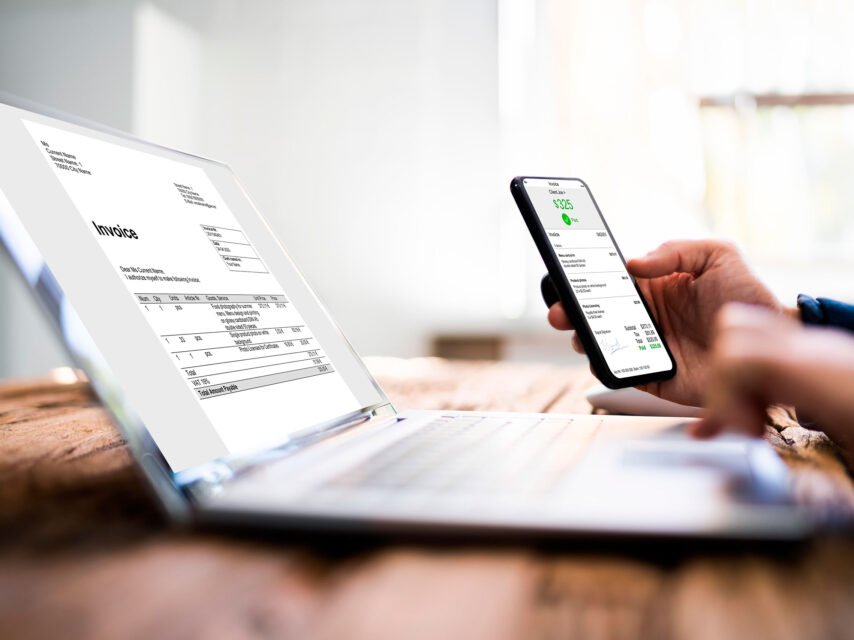
Creating an Invoice or Payment Request
After sharing payment details, the next step is usually issuing an invoice or sending a payment request. This formalizes the transaction and provides clear instructions to the client.
This can take different forms, including traditional invoices, digital invoices with integrated payment options, or direct payment requests created within a platform.
Some invoicing tools allow you to create, send, manage, and track invoices in one place, which helps standardize the workflow and reduce confusion.
Payment Processing and Tracking
Once the payment is sent, it enters the processing stage. International payments can take time to move through different systems, and tracking becomes important.
Some providers and payment networks offer tracking features that allow you to monitor the status of the payment from initiation to completion.
Confirming Receipt
The final step is confirming that the funds have arrived and checking the actual amount received.
Because international payments may involve multiple layers of fees and conversion, the final amount can differ from the original invoice. Verifying the received amount helps ensure that the transaction matches expectations.
In practice, the workflow typically follows this sequence: share payment details → send invoice or request → wait for processing → confirm receipt.
Understanding each step helps reduce uncertainty and makes it easier to manage international payments consistently.
Documents and Requirements You May Need
In some cases, clients may require additional documentation before they can process a payment. This is especially common when tax or regulatory requirements are involved.
For example, U.S. clients may request a tax form before making a payment to a foreign freelancer.
For individual freelancers, this is often Form W-8BEN. If you operate through a legal entity, a different form such as W-8BEN-E may be required instead, depending on the situation.
These forms are usually provided directly to the client or payer rather than submitted to tax authorities by the freelancer.
In addition to tax forms, some clients or payment providers may request additional information depending on the situation. The exact requirements depend on the client, the payment method, and the regulatory context.
Practical Example
Consider a freelancer based in Europe working with a client in the United States.
The client prefers to pay in USD using a method that aligns with their internal processes. To match this setup, the freelancer issues an invoice in USD, allowing the client to pay without handling currency conversion on their side.
Before the first payment, the client requests a tax form confirming that the freelancer is a non-U.S. individual. The freelancer provides the required form directly to the client.
The client then sends the payment using the agreed method. The freelancer monitors the payment status and waits for the funds to arrive.
Once the payment is received, the freelancer checks the final amount and confirms that the transaction is complete.
This example shows how currency choice, payment details, documentation, and tracking work together as part of a single process rather than separate steps.
Common Mistakes
Ignoring Currency Conversion
One of the most common mistakes is ignoring how currency conversion affects the final amount. If the payment is sent in one currency and received in another, the conversion rate can significantly change what you receive.
Focusing Only on Visible Fees
Looking only at the visible fee can give a misleading picture of the true cost. The final amount may be affected by multiple layers of charges, including conversion margins and intermediary deductions.
Overlooking Payment Details
Incomplete or incorrect payment details can slow down the process or prevent the payment from going through. In some countries, additional information may be required, making accuracy essential.
Assuming One Method Works Everywhere
Another mistake is assuming that a single payment setup will work equally well for all clients and situations. Fees, processing times, and requirements vary depending on the countries, currencies, and providers involved.
International payments involve multiple variables, and treating them as a simple, uniform process can lead to unexpected issues.
Conclusion
International payments are not defined by a single method, but by how well the chosen setup fits the specific situation.
Each payment depends on factors such as the client’s location, the currency used, the payment route, and the tools involved. The same method can work well in one context and less effectively in another.
The most reliable approach is to focus on understanding how different payment methods work, how costs are structured, and how the process unfolds from start to finish.
By aligning these elements — method, cost, and workflow — you can create a payment setup that is predictable, transparent, and easier to manage in practice.
Next Step
If you want to go deeper, the next step is to understand how to structure your invoices and choose the right tools for sending them.
You can continue with:
- How to Invoice International Clients
- Invoice Required Fields
- SWIFT vs Wise vs Payoneer
- W-8BEN Explained
By combining a clear invoicing process with the right payment method, you can build a consistent system for working with international clients across different countries and currencies.
About write

Lucas Meyer
Global payments specialist with experience in international banking, currency operations and payment infrastructure for remote businesses.











0 Comments
Leave a comment